 Medically reviewed by Scott Johnson, PT, MSPT, OCS, CF-L1
Achilles Tendon Rehab Specialists
Achilles Tendon Rehab in Bend: Data-Driven Recovery After Surgery
You survived surgery. Now comes the part nobody fully prepares you for: the slow, uncertain road back to walking without pain, running with confidence, and trusting your body again.
- VALD Force Plate TestingReal-time symmetry data at every stage.
- Soleus-Specific TestingIsolating the deep calf muscle where atrophy hides.
- Criteria-Based ProgressionsMove forward based on strength, not dates.
Key Metrics That Guide Your Recovery
85%Of total running force channeled directly through the soleus muscle
11 moAverage clinical timeline for safe return-to-sport after an Achilles rupture
60 minFull, undivided 1-on-1 sessions with an orthopedic specialist
3Phase criteria-based recovery system backed by biomechanical data
After an Achilles tendon repair or major calf surgery, every step carries a question. Am I pushing too hard? Not hard enough? How will I know when it is actually safe to run? These are not small worries. A re-rupture can set you back to square one, and the fear of one can be just as limiting as the injury itself.
At PhysioFIT in Bend, Oregon, we built our Achilles tendon surgery recovery program around one core principle: your recovery should never depend on guesswork. Using the same force-testing technology found in elite sports science labs worldwide, we measure your surgical leg's strength, track it week over week, and use that data to make every progression decision with absolute precision.
This is Achilles tendon physical therapy that gives you something a calendar and a "how does it feel?" question never can: objective proof that your healing is on track.
Why Specialized Care Matters
Why Achilles Tendon Surgery Demands More Than Standard Physical Therapy
After an Achilles repair, how your leg feels is a poor predictor of how it is actually healing. Objective force measurement is the only reliable way to confirm your calf is ready for each stage of progression.
01
The Problem with "Wait and See"
Your Achilles tendon and calf muscles form what clinicians call the calf muscle-tendon unit (MTU). This system is responsible for a significant share of the work your lower body performs during running, jumping, and cutting. Published biomechanical data shows the calf MTU contributes roughly 35% to 40% of total lower-body output across these activities. When surgery disrupts that system, two things happen simultaneously:
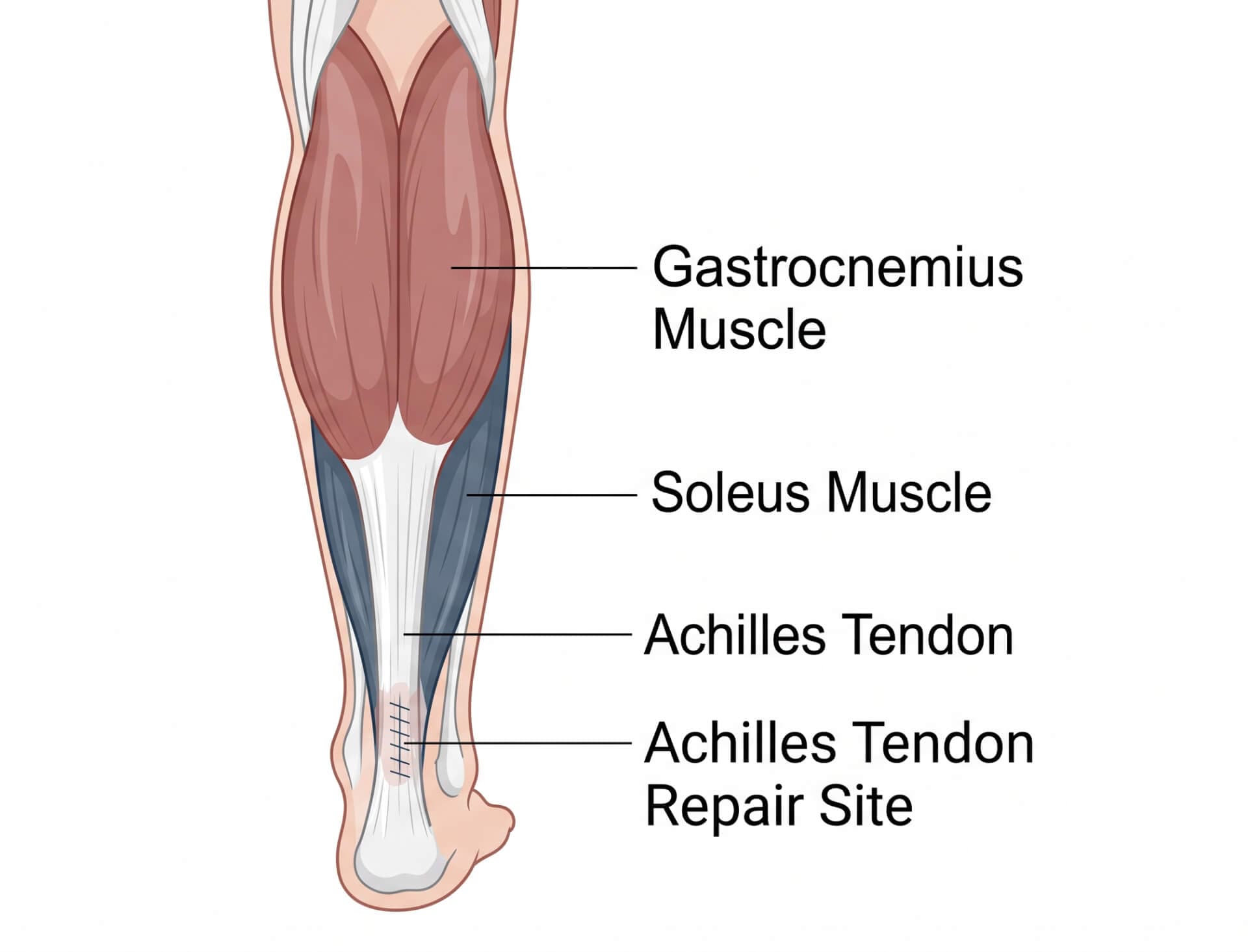
- Rapid muscle atrophy begins almost immediately. Your soleus, the deep calf muscle that bears the majority of load during walking and running, is especially vulnerable. Because it sits beneath the gastrocnemius and is harder to isolate with traditional exercises, soleus weakness can persist long after the surgical site itself has healed.
- Compensatory patterns develop quickly. Your body will recruit your quadriceps, hip flexors, and opposite leg to pick up the slack. Without objective measurement, these compensations can go unnoticed for months, increasing re-injury risk and delaying your return to full activity.
02
Pain and Symptoms Are Unreliable Guides
In our clinical experience, and supported by current rehabilitation research, subjective symptoms often lag behind or misrepresent actual tissue readiness. A calf that feels perfectly fine during daily walking may still lack 40% of the force capacity needed to absorb the high-impact demands of running. This is why a criteria-based progression, driven by measurable force data, has become the modern standard of care in post surgery rehabilitation.
03
The Stakes Are Higher Than a Typical Lower-Leg Injury
Whether you are recovering from a complete tear or navigating an Achilles rupture rehab protocol, recovery timelines are significantly longer than most lower-leg injuries. Published clinical data places the average return-to-sport at approximately 11 months. The recurrence rate is relatively low (around 2.3%), but when a re-rupture does occur, the consequences are severe.
This timeline demands patience, but it also demands extreme precision. Dedicated calf muscle rehab after surgery requires a fundamentally different approach than treating a basic muscle strain.
The Soleus Is the Weak Link Nobody Tests
Most standard rehab protocols treat the calf as one single muscle group. It is not. After Achilles surgery, the soleus often atrophies more severely than the gastrocnemius, yet many clinics never test these muscles independently. At PhysioFIT, we resolve this gap entirely.
Learn more about our full Post Surgery Rehabilitation program.
VALD Technology Integration
How VALD Force-Testing Technology Protects Your Achilles Repair
VALD force-testing systems replace subjective manual muscle tests with precise, measurable force data at every stage of your Achilles tendon surgery recovery. Your physical therapist will know exactly how many Newtons of force your surgical leg produces, how it compares to your healthy leg, and when it is genuinely safe to progress.
At PhysioFIT, we utilize the VALD Human Performance Suite (the same force-testing technology used by Premier League medical staffs, Olympic training centers, and elite ballet companies). For advanced Achilles tendon rehab, three specific capabilities matter most:
Separating the Soleus from the Gastrocnemius
Most clinics test your calf as a single unit. After Achilles surgery, that is simply not good enough. The soleus and gastrocnemius recover at completely different rates. The soleus, the deeper of the two muscles, almost always falls further behind.
Using VALD ForceDecks, we run two versions of the same strength test:
Seated Plantar Flexion Test
Bending your knee shortens the gastrocnemius, forcing your soleus to do the vast majority of the work.
Standing Plantar Flexion Test
Engaging the entire lower leg to measure both muscles working together.
Comparing your force output in each position tells us exactly which muscle is lagging and by how much. This distinction matters because your soleus carries a disproportionate share of the load during running, managing approximately 85% of peak calf force output. If we cleared you to run based on a single combined calf test, a hidden soleus deficit could put your repair at serious risk.
Tracking Your Limb Symmetry Index Week Over Week
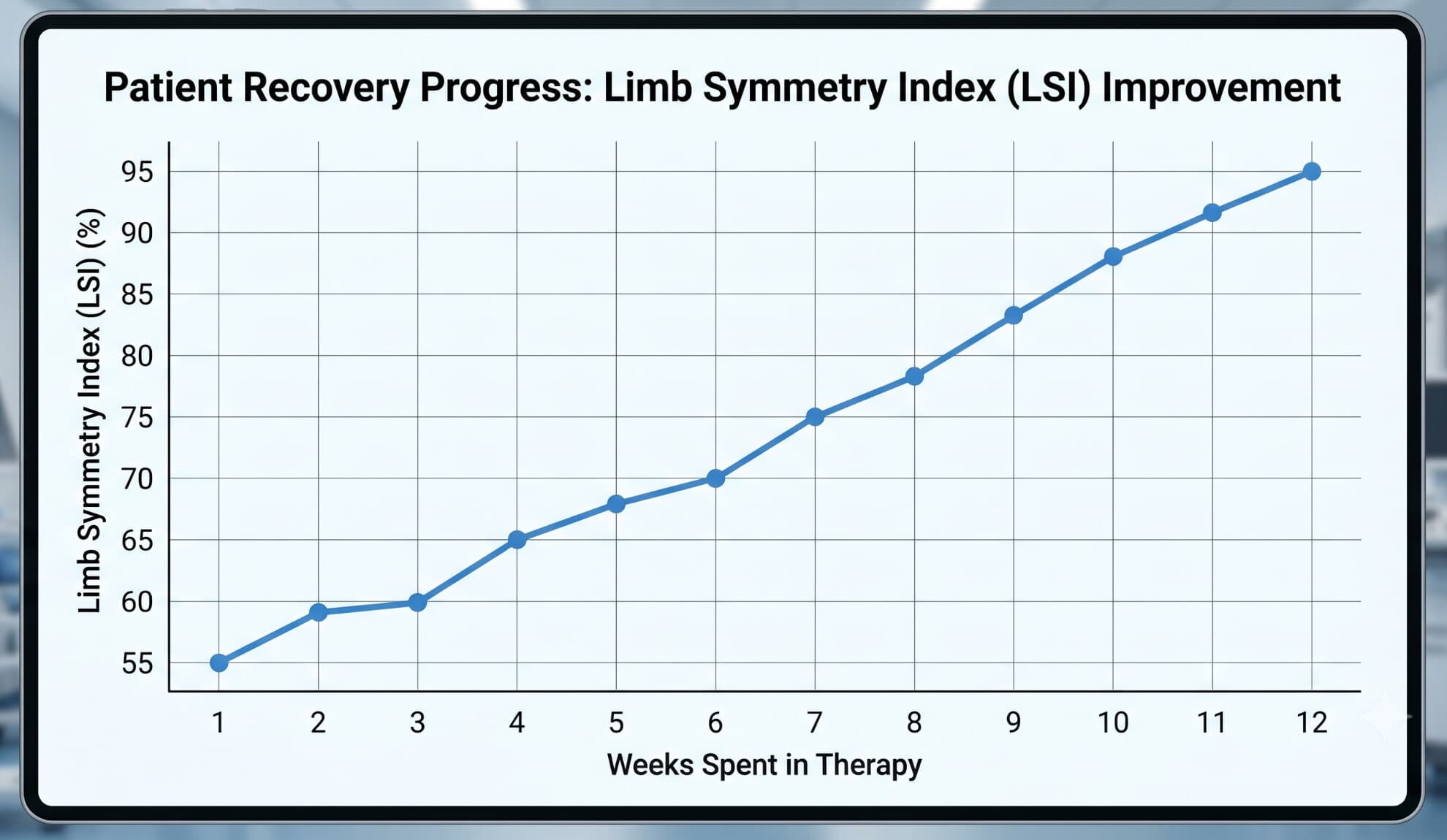
Your Limb Symmetry Index (LSI) compares the force your surgical leg produces to your healthy leg, expressed as a percentage. We measure it at every session using ForceDecks, giving you clear, visual metrics of your progress.
However, LSI alone does not tell the full story. Published research (O'Neill et al., 2019) has shown that even the uninjured calf in patients with Achilles injuries often produces less force than healthy, age-matched controls. This means your "good leg" may not be as strong as it should be either. That is why we also compare your results to population-level normative data from VALD's database. Your recovery targets will reflect true healthy function, not just symmetry between two potentially weakened legs.
Controlling Load With Precision in Early Post-Op Phases
The first weeks after surgery are when your repair is most vulnerable. Push too hard and you risk damaging the tissue; do too little and muscle atrophy accelerates rapidly.
The VALD ForceFrame solves this by letting us set exact force targets for your isometric calf exercises. Instead of telling you to "push gently" (which means something completely different to every patient), we program a specific Newtons target on a digital screen. You push directly to that number and stop. Every single rep is recorded, allowing us to see your response from session to session and adjust your loading with clinical data rather than intuition.
Simultaneously, the DynaMo system handles the mobility side, tracking your ankle range of motion (ROM) at each visit. Consistent, comparable measurements confirm your dorsiflexion is progressing safely without placing premature stress on the repair.
Clinical Perspective: Why We Start Force Testing Early
Many patients assume that force-plate technology is only relevant in the final stages of rehab when they are preparing to return to running or sport. In our practice, we introduce VALD testing from the earliest sessions following medical clearance.
The rationale is well-supported by current isometric training research: gentle isometric loading can begin early in the post-surgical window to preserve muscle activation and minimize atrophy. Because isometric contractions do not require joint movement, they can often be performed before a patient has regained full range of motion.
Isometrics are also self-limiting by nature, meaning the patient controls the intensity, making them one of the safest early loading strategies available. Additionally, research has shown isometric contractions can help reduce pain in affected muscles and joints, which significantly improves patient confidence and compliance during the most frustrating phase of recovery.
By pairing these evidence-based isometric protocols with ForceFrame's measurable loading targets and ForceDecks biofeedback, we track progress with a level of detail that subjective clinical assessments simply cannot provide. This is not about pushing patients harder or earlier; it is about loading intelligently, measuring precisely, and adjusting weekly based on what the data shows.
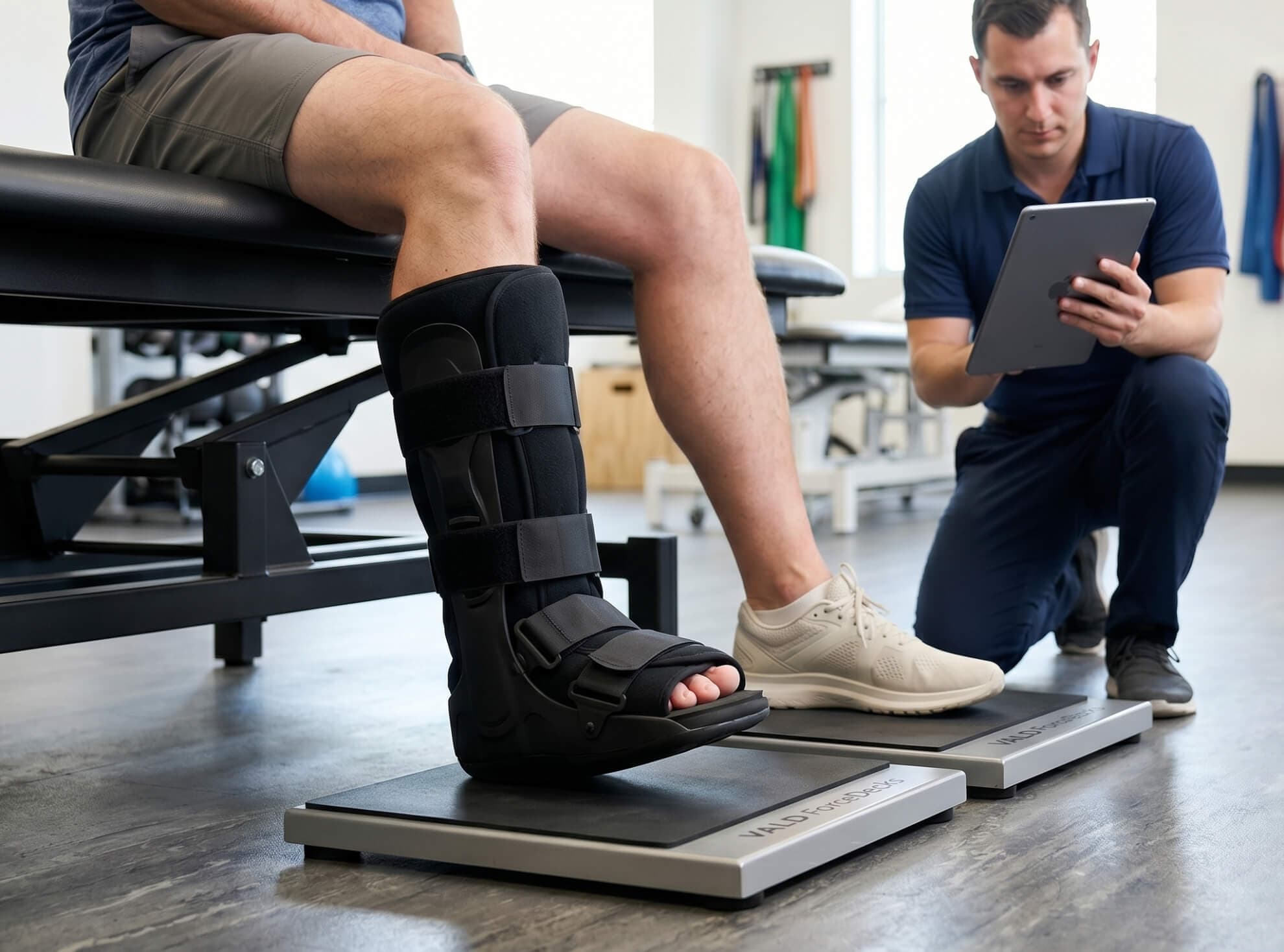
Early-Phase Force TestingSafe, low-level isometric testing on VALD ForceDecks, even while still in a walking boot
Time-Based vs. Data-Driven Milestones
Time-Based Guesswork vs. Objective ForceDecks Milestones
The difference between traditional, calendar-driven rehab and objective, data-driven progression is substantial. Here is how the two approaches compare at each major decision point in your Achilles tendon repair recovery:
| Recovery Decision | Traditional Time-Based Approach | PhysioFIT's Objective Data Approach |
|---|---|---|
| When to begin loading the repair | “Wait 6 weeks, then start gentle exercises.” | Introduce measured isometric loading within medical clearance using ForceFrame Training Mode with specific Newtons targets. |
| How to track soleus vs. gastrocnemius | Manual muscle testing (subjective clinician grades from 1 to 5). | Seated vs. standing plantar flexion MVIC on ForceDecks, capturing true peak force, rate of force development (RFD), and side-to-side asymmetry. |
| Determining readiness to walk without a boot | “You are at week 8, let's try walking.” | Limb Symmetry Index (LSI) and balance metrics from a force plate quiet-stand assessment confirm actual weight-bearing readiness. |
| When to start running safely | “You are 12 to 16 weeks post-op, try a light jog.” | Soleus peak force restored to benchmark levels; LSI within a clinically acceptable range; hop test symmetry confirmed objectively on ForceDecks. |
| Clearing for full return to sport | “It has been 6 to 12 months, see how it feels.” | Peak force, RFD, reactive strength index (RSI), and strength endurance are all within target ranges compared to age-matched normative data. |
Your Phase-by-Phase Recovery Journey
Your Achilles Recovery: Phase by Phase
Post-surgical Achilles recovery follows three distinct phases: early tissue protection, force capacity restoration, and return-to-run preparation. Each phase has specific, measurable criteria that must be met before progressing.
Our Achilles tendon rehab program grounds this framework in biomechanical evidence. You advance based on what your body proves it can handle, not based on a date on the calendar.
1
Phase 1
Early Tissue Healing and Protection
The first priority after Achilles surgery is to protect the repair while actively combating the muscle loss and joint stiffness that begin immediately. Early, controlled loading within medical clearance produces significantly better outcomes than prolonged, passive immobilization.
This Phase Includes:
- Balance Testing and Training: Quiet-stand and single-leg-stand assessments on ForceDecks measure your proprioception and weight-bearing tolerance. Real-time visual biofeedback lets you see exactly how much load you are placing through your surgical leg, building early psychological confidence.
- Controlled Isometric Loading: Using ForceFrame's Training Mode, we set precise force targets for your calf that stay safely within your tissue's current tolerance. The goal is to provide enough measured stimulus to slow down atrophy and maintain neural drive to the muscle while the repair heals.
- Accessory Muscle Training: Your quadriceps, hamstrings, and glutes do not need to wait for your Achilles to heal. Targeted isometric and dynamic training for these muscle groups keeps your overall conditioning high during a frustrating recovery period.
- ROM Tracking: Consistent ankle dorsiflexion measurements using DynaMo confirm your early mobility goals are being met without placing unnecessary stress on the repair site.
2
Phase 2
Restoring Force Capacity
This phase focuses on rebuilding the raw strength your calf MTU needs before you can safely return to dynamic, high-impact activities. This is often the most mentally challenging stage because you may feel completely normal in daily life while your force data reveals significant remaining deficits.
This Phase Includes:
- Peak Force Assessment: This is where seated vs. standing testing becomes central to your programming. We measure your soleus and gastrocnemius independently and set your personal force targets based on your pre-injury baseline, your healthy limb, and age-matched population norms. Well-conditioned athletes can produce over 2,000N seated and over 3,000N standing, so your targets scale directly to your ultimate activity goals.
- Limb Symmetry Index (LSI) Progression: Your LSI becomes a primary decision-making tool. Because we also compare your numbers to population-level norms, we can identify whether both legs need comprehensive strengthening, not just the surgical side.
- Strength Endurance Training: ForceFrame Training Mode tracks your calf's ability to sustain submaximal force over time, addressing the endurance demands of walking, climbing stairs, and eventually running. Our heel raise endurance benchmarking follows strict execution standards to ensure consistency: controlled tempo, consistent heel height, full knee extension, and minimal upper body support.
- Fatigue Response Testing: We measure your plantar flexion peak force immediately after a maximal heel raise test to evaluate how your calf responds to cumulative loading. Published research (Sara et al., 2021) has identified up to 20% peak force reductions after endurance testing as a useful benchmark for distinguishing normal fatigue from clinically significant deficits.
3
Phase 3
Return to Running After Achilles Surgery
You do not graduate to running because enough weeks have passed on a calendar. You graduate because your force data proves your calf can safely handle the immense load.
This Phase Includes:
- Running Readiness Testing: Before your first running session, we confirm that your seated and standing peak forces are within a strict, clinically acceptable threshold of your healthy leg. We also assess hop test symmetry and reactive strength on ForceDecks to evaluate how your calf performs under dynamic, impact-based loading.
- Graduated Running Reconditioning: Running volumes and intensities are progressed methodically. The reconditioning process after Achilles and calf surgery differs from standard return-to-run programs because of the outsized force demands the calf MTU absorbs even at slow running speeds.
- Plyometric Loading: Short ground-contact, low-amplitude plyometric exercises rebuild your calf's reactive strength, which is the rapid force production ability that the calf MTU relies on during sport. ForceDecks hop testing tracks your drive-off force asymmetry to confirm both legs are contributing equally.
- Comprehensive Strength Profiling: Before clearing you for full sport or trail access, we assess multiple strength domains: isometric strength (MVIC), dynamic force, reactive strength (RSI), and dynamic timing. Current research (Geneau et al., 2024) has identified these as distinct, measurable qualities. Deficiency in one domain can mask itself as adequate performance in another, which is why a comprehensive profile prevents premature clearance.
- Ongoing Monitoring: Even after returning to your sport, regular force testing catches emerging deficits before they turn into re-injuries. Published data suggests that force or endurance deficits exceeding 20% during the early return-to-sport window may indicate poor fatigue resistance, which is associated with elevated reinjury risk.
Next Step: Rebuilding Your Running Mechanics
Preparing for your return to running after Achilles surgery? Our Performance Programming includes one-on-one running gait coaching to rebuild efficient, resilient mechanics once you are cleared to run.
The PhysioFIT Difference in Bend
Why Bend, Oregon Athletes and Active Adults Choose PhysioFIT for Achilles Recovery
Bend is a town built on movement. Whether you are a trail runner navigating Phil's Trail, a skier cutting lines at Mt. Bachelor, or a climber at Smith Rock, getting back to your sport after Achilles surgery is not just a goal, it is a core part of who you are.
Our specialized program for Achilles tendon physical therapy patients was designed for people who need more than a generic exercise handout. We combine the clinical rigor of an evidence-based physical rehabilitation program with technology that removes all uncertainty from your recovery.
What Sets Our Clinic Apart:
- 1VALD-Equipped Facility: ForceDecks, ForceFrame, and DynaMo give us force-testing capabilities typically found only in professional sports medicine settings and university research labs.
- 2Soleus-Specific Testing: Seated vs. standing isometric testing isolates the muscle most vulnerable to post-surgical atrophy, a critical distinction most clinics do not make.
- 3Normative Data Comparison: Your results are benchmarked against VALD's population-level norms, ensuring you are truly strong, not just symmetrical to a potentially weakened opposite leg.
- 4Criteria-Based Progression: You move forward when your force data confirms you are ready, not when a calendar says so.
- 5Transparent Communication: You see your numbers at every session. You understand your milestones. You know exactly where you stand in the process.
Learn more about the VALD Human Performance Suite and its clinical applications, or explore published Achilles tendon rupture rehabilitation research on PubMed.
Book Your Post-Surgical Achilles and Calf Assessment in Bend
If you have recently undergone Achilles tendon surgery, a calf muscle repair, or surgical debridement for chronic Achilles tendinopathy, the next step is an assessment that tells you exactly where your strength stands today and maps a clear, data-driven path forward.
If you are managing Achilles tendinopathy without surgery, our evidence-based tendinopathy treatment guide covers the progressive loading program that resolves most cases.
Your Initial Achilles and Calf Assessment Includes:
- Baseline force testing (seated and standing plantar flexion)
- Limb Symmetry Index (LSI) measurement
- Digital range of motion assessment
- An individualized rehabilitation plan with measurable, data-driven milestones
- A clear explanation of every number and what it means for your timeline
Your recovery deserves better than guesswork.
Common Questions
Frequently Asked Questions
Published clinical data places the average return-to-sport timeline after an Achilles tendon rupture at approximately 11 months. However, every case is completely unique. At PhysioFIT, your Achilles surgery recovery timeline is determined by measurable force and performance milestones, not a fixed calendar date. Some patients return to sport sooner; others require more time to safely build capacity. Your objective data guides the decision.
Expert Clinicians
Your Achilles Rehab Clinicians
Our Achilles rehab team pairs orthopedic expertise with VALD force testing to guide every stage of your post-surgical recovery in Bend.
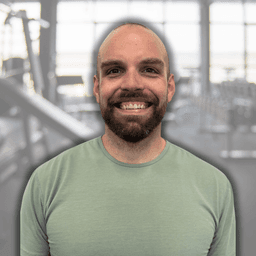
Scott JohnsonPT, MSPT, OCS, CF-L1
Co-Founder
Scott is a physical therapist with over two decades of experience working with Olympic hopefuls, NFL pros, X-Games athletes, and CrossFit Games competitors. He co-founded PhysioFIT in Bend, Oregon.
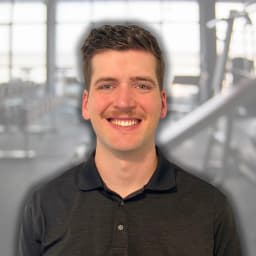
Zach MunizzaPT, DPT, CSCS
Physical Therapist
Zach is a Doctor of Physical Therapy trained internationally in Australia, specializing in lower-body rehab: knees, ankles, and sports performance.
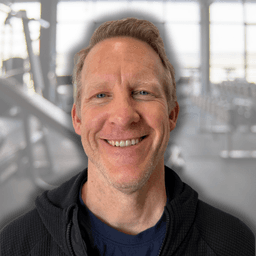
AndyPT, OCS
Physical Therapist
Andy is a board-certified orthopedic physical therapist with over 20 years of clinical experience, advanced NAIOMT manual therapy training, and experience instructing in an orthopedic residency program.
Ready to Recover Without the Guesswork?
Whether you are weeks out of surgery or preparing for your first run back, objective force data is the safest path back to the trails, slopes, and sports you love.