


Co-Founder at PhysioFIT·May 13, 2026·10 min read
The short answer: Achilles tendinopathy is treated by progressively loading the tendon, not by resting it. The condition is a problem of tendon capacity — the tissue has been overloaded faster than it could adapt — so the fix is a structured calf-strengthening program that rebuilds that capacity over about 12 weeks. Rest and ice can quiet the pain for a few days, but the moment you return to activity it comes back, because nothing actually got stronger. Here's the program that does.
Does this sound like you?
- Morning stiffness in the tendon for the first steps out of bed.
- Pain that warms up during activity, then aches afterward and the next day.
- A tender, sometimes thickened spot either 2–6 cm above the heel (midportion) or right at the heel bone (insertional).
That pattern is classic tendinopathy — and it responds well to the right loading.
I'm a physical therapist at PhysioFIT in Bend, and lower-leg and ankle rehab is my wheelhouse. Achilles tendinopathy is one of the most common — and most over-rested — injuries I treat. If you've been told to just rest it and it keeps coming back, this guide is for you. (If you're still figuring out whether your heel pain is even the Achilles, start with our overview of Achilles tendonitis and how physical therapy helps, then come back here for the treatment plan.)
Tendinitis vs. Tendinopathy: Why the Word Matters
People use "tendinitis" for everything, but the distinction completely changes your treatment:
| Tendinitis | Tendinopathy | |
|---|---|---|
| What it is | Short-term, genuinely inflamed tendon. | Weeks-to-months of disorganized, weakened collagen with little true inflammation. |
| Most people actually have | Rarely — true tendinitis is brief. | This one. If it's lasted more than a few weeks, it's tendinopathy. |
| What helps | Short rest, relative load reduction. | Progressive loading to remodel the tendon. Rest alone makes it weaker. |
| What doesn't | — | Prolonged rest, ice/NSAIDs as the main plan, passive treatment only. |
This is the single most important reframe: a degenerative tendon doesn't need anti-inflammatories, it needs a reason to rebuild. Load is that reason.
Midportion vs. Insertional — Find Your Type First
Before you start any exercise, figure out where it hurts, because it dictates how you load:
- Midportion tendinopathy — pain and thickening 2–6 cm above the heel. The classic, most-studied type. Tolerates full-range calf raises and heel drops below a step.
- Insertional tendinopathy — pain right where the tendon meets the heel bone. The tendon gets compressed against the bone in deep dorsiflexion, so dropping your heel below a step or aggressive stretching usually flares it. Keep loading on flat ground or a slight incline.
Get this wrong — doing deep heel drops for an insertional case — and you'll spin your wheels for months. Get it right and the same program that failed before starts working.
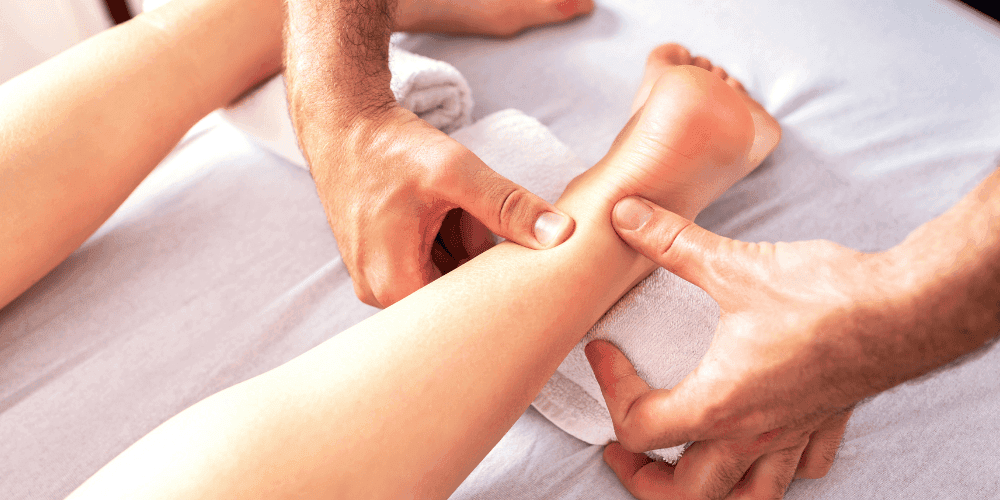
The Evidence-Based Loading Program
Here is the progression we run, built on the research that's held up for over two decades (heavy isometrics, eccentric heel drops, and heavy-slow resistance). Work through the phases by how the tendon responds, not by the calendar — and use the 24-hour rule: pain during and after loading should settle to baseline by the next morning. If it does, the load was appropriate.
Phase 1 — Isometrics to Calm the Pain (Weeks 1–2)
Heavy isometric holds reduce tendon pain and let you start loading even when it's irritable. Stand and push up onto the balls of your feet (two legs, or one if tolerable) and hold for 30–45 seconds. Do 4–5 holds, once or twice a day. It should feel hard but not sharply painful. Many people walk out of the first session with noticeably less pain from this alone.
Phase 2 — Heavy Slow Resistance / Eccentrics (Weeks 2–8)
This is the engine of recovery — the phase that actually rebuilds the tendon:
- Midportion: Heel drops off a step. Rise up on two legs, shift to the affected leg, and lower slowly (3–4 seconds) below the level of the step. 3 sets of 15, twice a day (the classic Alfredson protocol). Add a backpack with weight as it gets easier.
- Insertional: The same slow calf raises, but on flat ground only — no dropping below the step. Keep the heel from dipping into that painful compressed position.
Either way, the secret ingredient is load and tempo: slow, heavy, and controlled. A pain level up to about 3/10 during the work is acceptable and even expected.
Phase 3 — Energy Storage & Return to Running (Weeks 8–12+)
Tendons store and release energy like a spring when you run and jump, and your rehab has to train that quality before you fully return. Progress to faster calf raises, hops, skipping, and pogo jumps, then layer running back in. Don't skip this phase — it's the bridge between "pain-free walking" and "back to the trails."
What Doesn't Work (and Wastes Months)
- Rest as the whole plan. It feels better, then the pain returns the moment you load, because the tendon is now weaker.
- Ice and NSAIDs as the main treatment. Fine for a short-term flare; useless for rebuilding a degenerative tendon.
- Aggressive stretching for insertional cases. It compresses the tendon and keeps it angry.
- Stopping the day it feels better. The tendon needs the full ~12-week block to remodel. Quitting at week 4 is why it keeps coming back.
Returning to Running Without Re-Flaring It
Bend is a running town, and most of my Achilles patients want back on the trails. The modifications that keep them there:
- Use the 24-hour rule. Run if pain stays ≤3/10 and is back to baseline the next morning. If not, dial volume back.
- Bump your cadence ~5–10%. Slightly shorter, quicker steps reduce the load through the Achilles on every stride.
- Progress volume, not speed, first. Rebuild your mileage before you reintroduce hills and speed work, which spike tendon load the most.
For a full framework on building back up, our runner's roadmap walks through smart progression.
When to See a Physical Therapist
You can start the loading program on your own, but get an assessment if:
- You're not sure whether it's midportion or insertional.
- Pain isn't improving after a solid 6–8 weeks of loading.
- The tendon is sharply painful or you can't tolerate any load.
- You felt a sudden pop with weakness pushing off — this can be a rupture and needs prompt evaluation.
How We Treat Achilles Tendinopathy at PhysioFIT
When you come in for overuse and sports injury rehab in Bend, we first confirm the type and irritability of your tendon, then build the loading program to your exact tolerance — and we measure calf strength objectively so we know when you're truly ready to run, not just guessing. We progress the load as the tendon adapts and coach the running return so it sticks. The goal is a tendon that's stronger than before it got hurt, not just quiet for a week.
Bottom line: Achilles tendinopathy is a loading problem with a loading solution. Confirm your type, work the phases, respect the 24-hour rule, and give it the full 12 weeks — that's how you fix it for good.
Frequently Asked Questions
What is the best treatment for Achilles tendinopathy?
Progressive loading is the gold-standard treatment — not rest. The strongest evidence supports a structured calf-strengthening program (heavy isometrics early to calm pain, then heavy-slow resistance or eccentric heel drops to rebuild the tendon), progressed over about 12 weeks. Rest, ice, and passive treatments may ease symptoms short-term but don't rebuild the tendon's capacity, which is why pain keeps coming back until you load it correctly.
What's the difference between Achilles tendinitis and tendinopathy?
Tendinitis implies active inflammation and a short-term injury. Tendinopathy is the more accurate term for the stubborn, weeks-to-months version most people actually have: the tendon's collagen has become disorganized and weakened from overload, with little true inflammation. That distinction matters because anti-inflammatory strategies (rest, ice, NSAIDs) help inflammation but not a degenerative tendon — that one needs progressive loading to remodel.
Should I stretch a painful Achilles tendon?
It depends where it hurts. For midportion tendinopathy (pain 2–6 cm above the heel), gentle calf stretching is usually fine. For insertional tendinopathy (pain right at the heel bone), aggressive stretching and dropping your heel below a step can compress and aggravate the tendon — so we keep loading on flat ground and avoid the deep stretch. Knowing which type you have changes the plan, which is why an assessment helps.
How long does Achilles tendinopathy take to heal?
Plan on about 12 weeks of consistent loading for a meaningful, lasting change, though many people feel noticeably better within 4–6 weeks. Tendons remodel slowly, so consistency beats intensity. Stopping the program the moment pain eases is the most common reason it returns — the tendon needs the full block to actually rebuild its strength.
Can I keep running with Achilles tendinopathy?
Often yes, in a managed way. The guideline we use: pain during a run should stay at or below a 3 out of 10 and settle by the next morning. If it does, you can keep running while you load and rebuild. If pain climbs higher or lingers into the next day, we temporarily reduce volume, increase cadence slightly to lower load, and let the strengthening lead the way back.
Do I need surgery or a scan for Achilles tendinopathy?
Rarely. The vast majority of cases resolve with a progressive loading program and never need imaging or surgery. Scans are reserved for cases that don't respond after a solid 3-month program, or when there's concern about a partial or full tear. A sudden, sharp pop at the back of the ankle with weakness pushing off is different — that can signal a rupture and needs prompt assessment. If you have already had Achilles surgery and are looking for a structured, data-driven recovery program, see our dedicated Achilles Tendon Rehab service page.
Please Note: The information on this page is for general education and is not a substitute for professional medical advice. Every tendon — and every body — is different, and a loading program should be matched to your specific tendon and tolerance, ideally with a qualified physical therapist. If you'd like a plan built for your Achilles, or want to train with a physical therapist in Bend, Oregon, reach out at PhysioFITBend.com.