ACL Rehab in Bend, Oregon: Return to Sport With Confidence
Expert ACL tear and ACL injury rehabilitation using objective testing and proven criteria. Whether you’re an athlete or weekend warrior, we’ll help you return stronger and safer.
Schedule Your Initial AssessmentKey Metrics
Why ACL Injuries Require a Specialized Approach
The anterior cruciate ligament (ACL) provides critical stability during cutting, pivoting, and jumping movements. When an ACL tear occurs, your knee loses this essential support, making specialized rehabilitation crucial for safe recovery.
Our approach ensures you’re not just healed, but truly ready for what comes next. No guesswork. Just measurable results.
Reinjury Rates Remain High
Research shows that approximately 15% of people who undergo ACL reconstruction will experience a reinjury to either the same leg or the opposite leg. Athletes who return to sport without meeting objective strength and movement benchmarks face significantly elevated risks. Meeting specific testing criteria before returning to activity can make the difference between full recovery and another ACL tear.
~15% reinjury rateEarly Milestones Predict Outcomes
Achieving full knee extension and range of motion early reduces the chance of postoperative complications. Recovering knee extension in the first weeks after surgery is essential to normalize your gait and reduce the risk of developing anterior knee pain, which is linked with poorer long term outcomes. Missing these early targets can delay your entire recovery timeline.
4-6 weeks criticalEvery ACL Injury Is Unique
Your age, activity level, surgical technique, and individual healing response all influence your recovery path. At PhysioFIT Bend, we use criteria based decision making backed by objective data, not arbitrary calendar dates.
100% personalized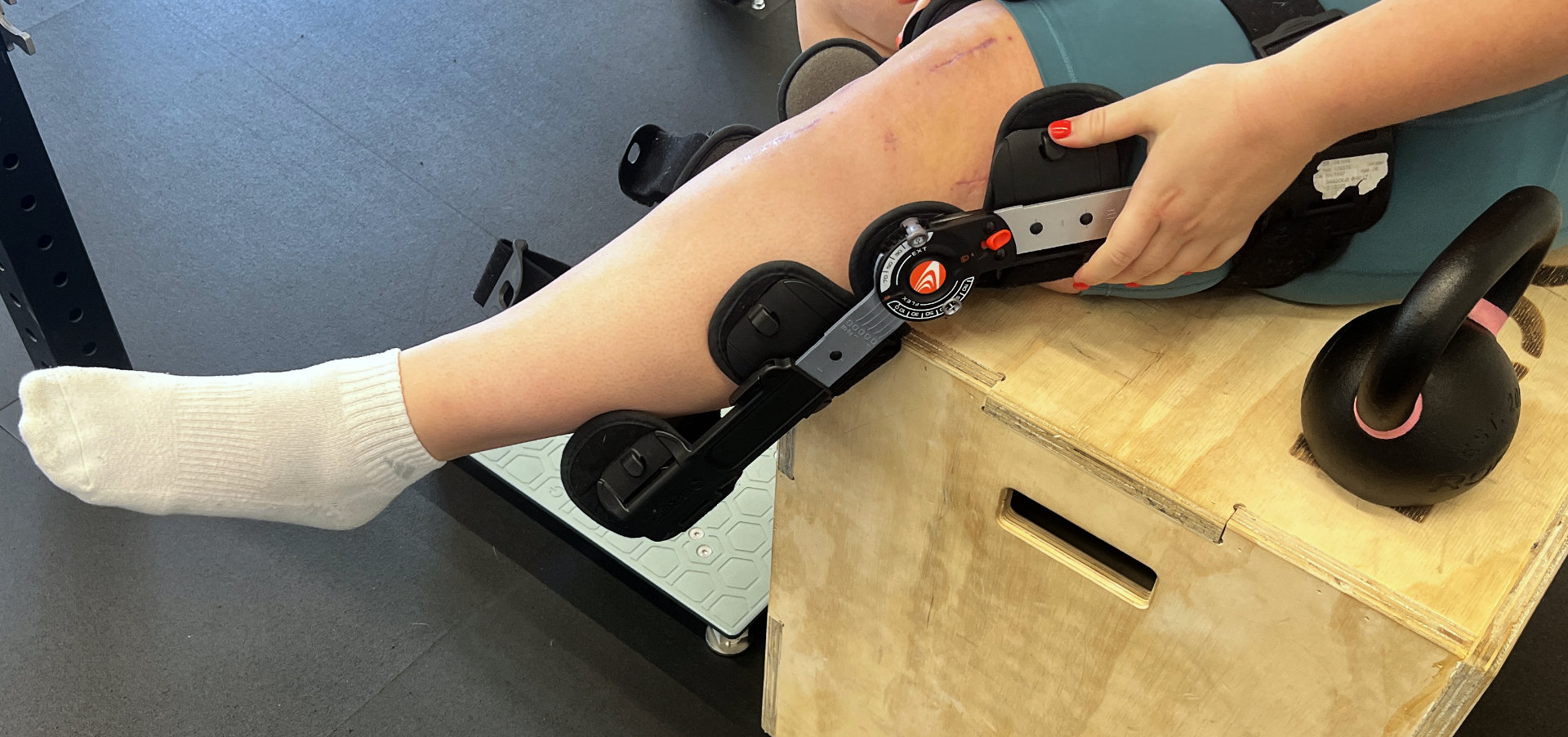
Our 6-Phase ACL Injury Recovery System
ACL rehab is a journey, not a sprint. At PhysioFIT Bend, we’ve developed a comprehensive six-phase system that guides you from post-surgical recovery through confident return to sport. Each phase builds on the previous one, with clear benchmarks that must be achieved before progressing.
Comprehensive Assessment & Recovery Roadmap
Your ACL recovery begins before you even step into our clinic. During your free discovery call, we take time to understand your goals, answer your questions, and explain exactly what to expect over the coming months.
We often describe this first phase as “packing your car for the recovery journey.” You’ll leave with clarity, confidence, and a clear understanding of the path ahead, whether you’re an athlete recovering from an ACL tear or getting back to your active lifestyle after ACL surgery.
Your Initial Assessment Includes:
- Detailed surgical history and physician protocol review
- Current range of motion and swelling assessment
- Baseline strength testing when appropriate based on surgical timeline
- Activity and sport specific goal setting
- Personalized recovery roadmap with phase specific milestones
Foundation Building – The Non-Negotiables
The first 4 to 6 weeks after ACL surgery are critical. Research consistently shows that patients who achieve early milestones experience fewer complications and faster overall recovery times.
We call these the “non-negotiables” because skipping or rushing through them compromises everything that comes later. Whether you’re a competitive athlete or a weekend warrior, getting these fundamentals right early means we can safely and effectively build your strength and movement capacity in the phases ahead.
Your Focus During Phase 2:
- Restore full range of motion: Both flexion (bending) and extension (straightening) must return to match your uninvolved leg
- Control swelling and inflammation: Persistent swelling inhibits muscle activation and delays healing
- Activate your quadriceps: Early quad activation prevents muscle atrophy and sets you up for successful strength building
- Normalize your gait pattern: Walking without a limp as soon as safely possible prevents compensatory movement patterns
Strength Restoration & Neuromuscular Control
Once your foundation is solid, we shift focus to rebuilding the strength and control your knee needs to handle everyday activities and, eventually, sport demands.
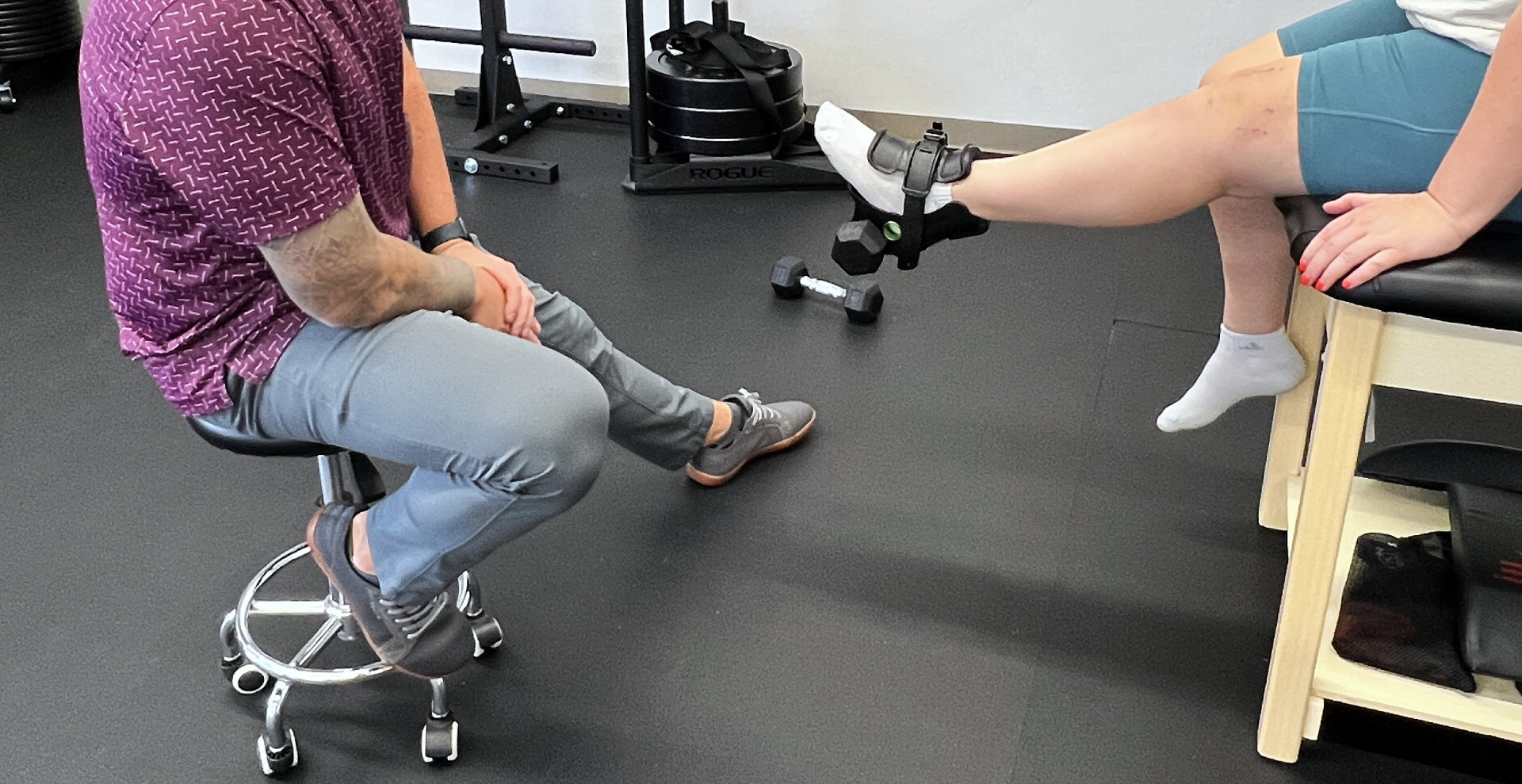
Throughout this phase, we use our VALD dynamometer to track your Limb Symmetry Index (LSI). Our target is achieving at least 80% LSI for quad strength before progressing to higher level activities. You’ll see your numbers improve week by week, providing tangible proof of your progress.
Phase 3 Training Includes:
- Progressive resistance training: Systematically increasing load on your quadriceps, hamstrings, glutes, and calf muscles
- Eccentric strength emphasis: Your muscles must be able to control lengthening forces, like landing from a jump. Eccentric training is crucial for injury prevention
- Balance and proprioception work: Retraining your brain’s connection to your knee after injury and surgery
- Bilateral and unilateral exercises: Building symmetry between legs while developing single leg stability
Power, Agility & Sport-Specific Movements
This is where your training starts to look and feel more like sport. Phase 4 bridges the gap between isolated strength exercises and the dynamic, multi-directional demands of athletics and active lifestyles.
Our force plates become especially valuable during this phase. We assess your landing mechanics, force absorption capabilities, and movement asymmetries during dynamic tasks. This data ensures you’re not just strong in the gym, but capable of handling the unpredictable forces of real sport and activity.
Phase 4 is personalized: A soccer player’s training will look different from a trail runner’s, but both receive the same rigorous, objective assessment of readiness.
Your Training Evolves To Include:
- Plyometric progressions: Jumping, landing, and rebounding exercises that develop explosive power
- Change of direction training: Cutting, pivoting, and lateral movements specific to your sport or activities
- Speed and acceleration work: Sprinting mechanics and progressive speed development
- Sport specific movement patterns: Training that matches the demands of your return goals
Return to Sport Preparation
You’re close. Phase 5 is about fine tuning your readiness and building the confidence to fully return to the activities you love.
We send detailed progress reports, complete with strength test results and force plate data, to your surgeon and coaches. They’ll have access to your data throughout your rehab, ensuring everyone is aligned on your readiness.
Timeline Transparency: Research is clear that returning to competitive sport before 9 months post surgery significantly increases reinjury risk. We honor this timeline while using objective criteria to determine your specific clearance date. Some athletes need 12 or more months; others may be ready at 10 months. Your body and your data guide the decision.
This Phase Includes:
- Progressive return to running: Structured volume progression for running based activities
- Practice integration: Attending team practices or recreational activities with modified participation
- Collaboration with coaches: We coordinate with your coaches or adapt for your personal routine to ensure appropriate progression
- Neuromuscular testing: Comprehensive force plate and movement assessments to confirm safe, strong return readiness
Performance Optimization & Re-Injury Prevention
Your ACL rehab doesn’t end the day you’re cleared for sport. Phase 6 focuses on long term success, peak performance, and minimizing your reinjury risk.
Long term maintenance programming: We provide you with a customized maintenance program to continue building strength, power, and resilience. Many of our clients continue training with us to optimize performance and stay injury free.
Research backed reinjury prevention: Current evidence shows that athletes who meet objective testing benchmarks, exactly what we provide with our VALD technology, have significantly lower reinjury rates. We don’t just get you back; we keep you back.
Final Clearance Includes:
- Complete battery of objective tests: dynamometer strength testing and force plate movement assessment
- Meeting or exceeding 90% Limb Symmetry Index across all measures
- Demonstrating sport specific movement quality without compensations
- Psychological readiness assessment, because confidence matters
Book Your PhysioFIT Discovery Call
If you’re interested in learning more about our physiotherapy services, book a call with us to learn more about your options.
Book Today!The PhysioFIT Difference: Metrics Driven ACL Rehab in Bend
Most physical therapy clinics rely on visual observation and subjective assessments to guide your ACL recovery. At PhysioFIT Bend, we combine clinical expertise with advanced technology to track your progress with precision, giving you confidence that you’re ready for each next step.
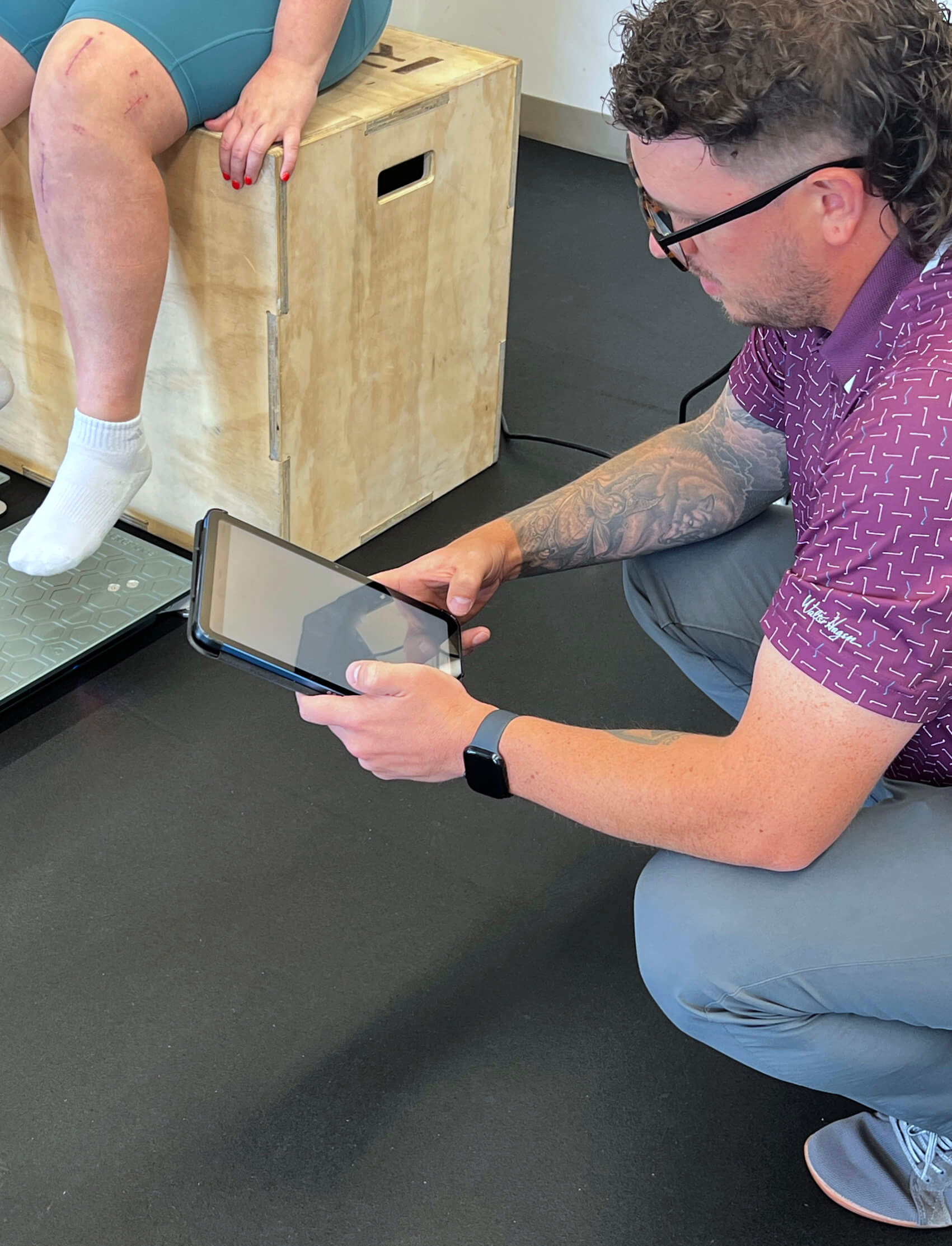
PhysioFIT Bend utilizes VALD ForceDecks and dynamometry systems to provide objective testing throughout your ACL tear or ACL injury rehabilitation.
Our VALD force plates measure your strength, balance, and movement patterns precisely, providing data you can see and track. Your benefit: We use objective data to determine when you’re ready to progress. You’ll see your progress in numbers, graphs, and objective markers that remove uncertainty from your recovery.
Limb Symmetry Index (LSI)
Compares your injured leg to your healthy leg, revealing strength imbalances that visual observation cannot detect
Eccentric Impulse Analysis
Measures your ability to absorb force safely during countermovement jumps, which is critical for preventing reinjury
Real-Time Strength Tracking
Tracks quadriceps, hamstring, and hip strength throughout your rehabilitation journey
Movement Quality Metrics
Identifies compensations before they become problems
Your body doesn’t heal according to a calendar. It heals according to how well you meet specific physical criteria.
At PhysioFIT Bend, we use evidence-based benchmarks to determine when you’re ready for each progression. For example, you won’t start running simply because you’ve reached a certain number of weeks after surgery. This criteria based approach, supported by current ACL rehabilitation research, ensures your tissues are ready to handle the demands of each new activity. The result is safer progressions and lower reinjury risk.
Return to Running Criteria – All 6 Required:
- 95% knee flexion range of motion
- Full knee extension with no limitations
- No or trace swelling in the knee
- 80% Limb Symmetry Index for quadriceps strength
- 80% LSI for eccentric impulse during countermovement jumps
- Pain free repeated single leg hopping
At PhysioFIT Bend, every ACL rehabilitation session is one on one for a full hour. This isn’t group therapy or shared appointment slots. It’s dedicated, personalized attention focused entirely on your recovery.
During your one on one sessions, we focus on mobility work, exercise, and manual therapy techniques. This ensures your appointment time is dedicated to what matters most for your recovery. This personalized approach ensures you’re not just another appointment on the schedule. You’re an individual with specific goals, and your rehabilitation reflects that.
Full Hour Sessions
Your therapist’s complete attention for the entire appointment, allowing time to address your specific needs, questions, and concerns
Individualized Programming
Every exercise, progression, and modification is tailored to your unique healing response, not a generic protocol applied to everyone
Real-Time Adjustments
Your therapist can immediately adapt your session based on how you’re moving, what you’re feeling, and what the data shows
Accountability & Education
Time to learn proper techniques, understand your home exercise program, and build the habits that support long term success
Technology & Tools That Power Your ACL Rehab
Superior ACL injury outcomes require superior tools. At PhysioFIT Bend, we’ve invested in advanced rehabilitation and performance technology to provide objective, data-driven assessment throughout your ACL tear recovery.
VALD ForceDecks & Dynamometry
What does VALD technology measure?
- Force production: How much force each leg generates during jumping, landing, and explosive movements
- Rate of force development: How quickly you can produce force, which is critical for athletic performance and often takes longer to restore than maximal strength
- Eccentric strength: Your ability to control lengthening muscle contractions, essential for safe landing mechanics and reinjury prevention
- Asymmetries: Left to right differences that indicate compensations or incomplete recovery
- Movement strategy: How you load and unload joints during dynamic tasks, revealing compensatory patterns that visual observation cannot detect
Why This Matters
Traditional physical therapy relies on visual observation. Your squat might look good, or you might appear to walk normally. But appearances can be deceiving. Athletes and active individuals become experts at compensating. They look symmetrical while their injured leg is producing significantly less force.
VALD force plates eliminate this guesswork. We see exactly what’s happening, measure it precisely, and track it over time. When we say you’ve achieved 90% Limb Symmetry Index, we can show you the data. When you’re ready to return to sport, we have objective proof, not just our opinion.
You’ll receive visual reports showing your progress throughout rehabilitation. There’s something powerful about seeing your strength improve in concrete numbers week after week. It transforms abstract recovery into tangible achievement.
Data-Driven Decision Making
The VALD system allows us to utilize age related norms, ensuring strength assessments of weak or strong are accurate and can be properly correlated with population data from around the world. This means we’re not just comparing your injured leg to your healthy leg. We’re comparing your overall capacity to what’s expected for someone of your age and activity level.
What this means for your recovery:
- Accurate asymmetry assessment: We ensure you’re getting individually strong and symmetrical, which significantly decreases risk for reinjury or contralateral injury
- Movement confidence tracking: Force plates can accurately pinpoint when you’re knowingly or unknowingly offloading or shying away from using your surgical limb, giving us insight into how you’re learning to trust your leg and reintegrate it into daily use
- Criteria based progressions: Data guides when you move to the next portion of rehab, not arbitrary timelines
This technology driven approach is what separates guesswork from genuine readiness. It’s why our clients return to sport with confidence, knowing their knee is truly ready for the demands ahead.
See Your Progress in Real Numbers
Our VALD ForceDecks capture precise force data during every jump, squat, and landing. You’ll see exactly how your injured leg compares to your healthy leg, week after week, giving you confidence that your recovery is on track.
Collaboration & Continuity: We Work With Your Full Team
ACL tear recovery involves multiple stakeholders: your orthopedic surgeon, your coaches or trainers, and your support system. At PhysioFIT Bend, we believe in transparent, coordinated care that keeps everyone informed and aligned throughout your ACL rehab journey.
Communication With Your Surgeon
Your surgeon has specific post-operative protocols and wants to track your ACL injury recovery.
- We send updates with copies of strength tests and force plate testing
- We create a profile for your surgeon so they have access to your data and can follow you throughout your rehab and return to sport
- Objective metrics replace vague progress descriptions: your surgeon sees concrete data like quad strength LSI percentages and hop test results
Communication With Your Coaches
Your coaches need to understand where you are in rehabilitation and what you can safely handle during practice.
- We provide strength test results, movement assessment findings, and clear guidance on practice participation at each phase
- We create profiles for your coaches so they can access your data at all times and understand your capabilities as you progress
- Everyone has access to the same information, supporting better clinical decision making
Coordinated Care Means Better Outcomes
When your surgeon, physical therapist, and coaches all have access to the same objective data, your ACL rehabilitation becomes more efficient. Decisions are informed by complete information and aligned with your return to sport goals. A multidisciplinary team with clear roles and effective communication keeps you at the center through shared decision making. This is how modern ACL rehab should work: collaborative, transparent, and driven by data you can see and understand.
Dedicated 1-on-1 Sessions: Your therapist’s complete focus for the full hour
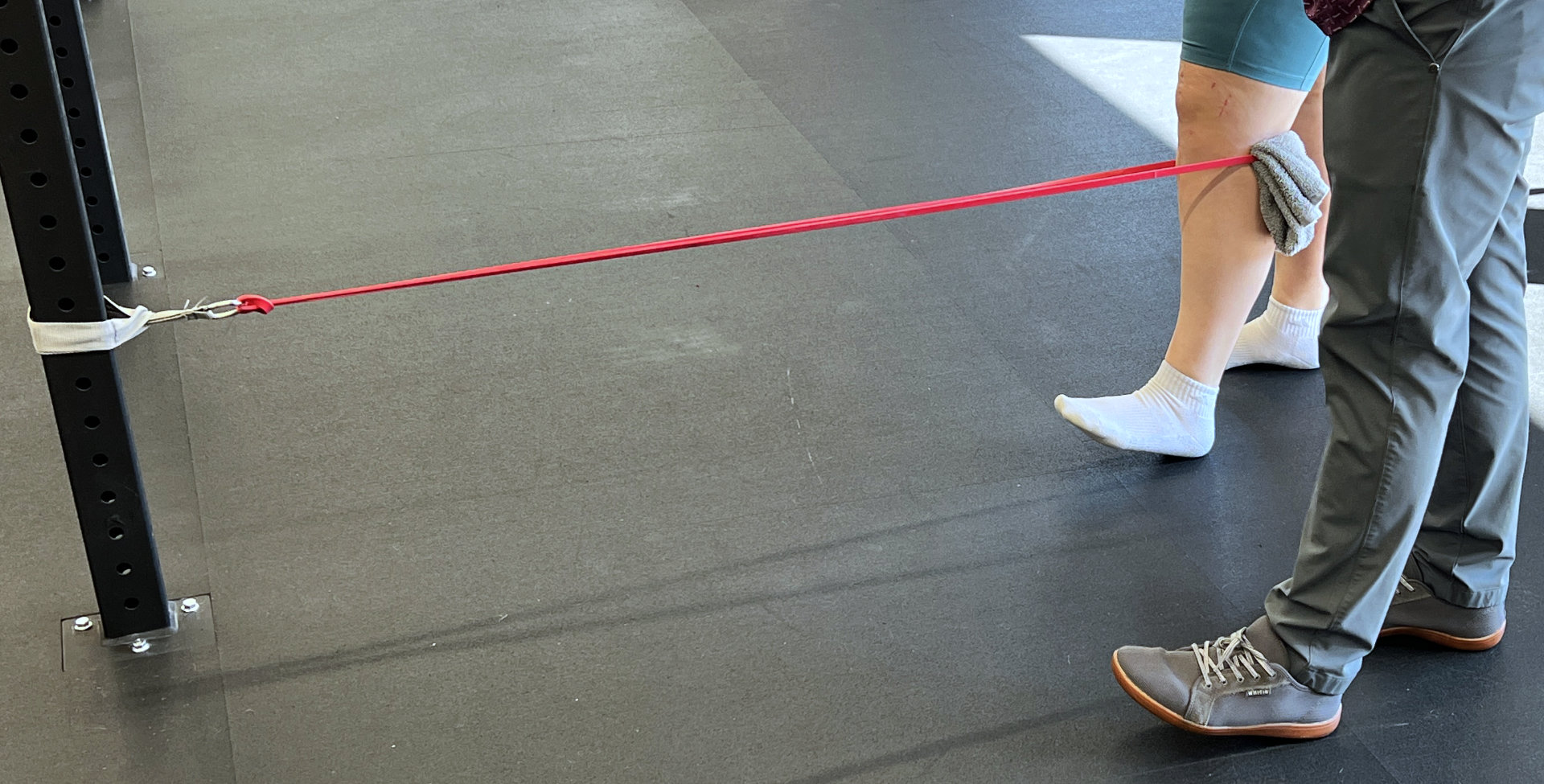
Progressive Strength Building: Systematic training tailored to your recovery phase
Frequently Asked Questions
Contact us to schedule your initial assessment. We’ll answer your questions, review your surgical history, and conduct comprehensive testing including range of motion, strength evaluation, and movement assessment.
You’ll leave with a personalized recovery roadmap, and from your second visit forward, you’ll be progressing through your individualized rehabilitation program based on objective criteria.
Yes! PhysioFIT Bend accepts most major medical insurance plans, HSA (Health Savings Account) cards, and FSA (Flexible Spending Account) cards. We also offer cash pay membership rates for those who prefer direct payment.
The minimum timeline for safe return to competitive sport after ACL reconstruction is 9 months. However, the actual timeline depends on meeting specific objective criteria, not just calendar dates. Some athletes require 10 to 12 months before they achieve the strength, movement quality, and confidence needed for safe return to sport.
For recreational athletes or those with lower demand activities, earlier return to selected activities may be appropriate, but always based on objective testing and criteria achievement, never arbitrary timelines.
At PhysioFIT Bend, we use metric based decision making. You progress when your body demonstrates readiness through objective testing, not when the calendar says you should.
At PhysioFIT Bend, we don’t use a time based return to running. We use criteria based decision making. You’ll begin running when you meet all six of these specific benchmarks:
- 95% knee flexion range of motion
- Full knee extension (no limitations)
- No or trace swelling in the knee joint
- 80% Limb Symmetry Index (LSI) for quadriceps strength
- 80% LSI for eccentric impulse during countermovement jump testing
- Pain free repeated single leg hopping
Most patients meet these criteria between 12 to 16 weeks after surgery, but individual timelines vary. Your progression is based on your body’s readiness, not averages or assumptions.
PhysioFIT Bend uses a comprehensive battery of objective dynamometer and force plate testing to determine return to sport readiness.
Dynamometer Testing (measures strength):
- Quadriceps strength assessment
- Hamstring strength assessment
- Hip and lower extremity strength evaluation
Force Plate Testing (measures power, explosiveness, and movement quality):
- Countermovement jump assessment with Limb Symmetry Index analysis
- Drop jump testing for reactive strength and landing mechanics
- Single leg jump performance evaluation
- Force production and eccentric braking force characteristics
- Movement strategy analysis including ground contact time and force time curves
Movement Quality Assessment:
- Landing mechanics analysis
- Bilateral and unilateral movement patterns
- Compensatory movement strategy identification
You must achieve 90% or higher Limb Symmetry Index and demonstrate appropriate movement quality across these measures to receive clearance for unrestricted sport participation. Your testing results are tracked longitudinally throughout your rehabilitation to ensure consistent progress toward these benchmarks.
Re-injury prevention is at the core of everything we do. Research clearly shows that the best predictor of low re-injury risk is meeting objective strength and movement benchmarks before returning to sport.
Our re-injury prevention approach includes:
- Comprehensive VALD dynamometer and force plate testing to ensure 90% or higher Limb Symmetry Index
- Movement quality assessment to identify and correct compensations
- Minimum 9 month return to sport timeline (unless non-competitive activity)
- Criteria based progressions that don’t advance until you’re truly ready
- Long term maintenance programming to sustain strength and resilience
- Education on self-monitoring and injury risk awareness
By using objective metrics rather than subjective assessment or arbitrary timelines, we minimize your re-injury risk and maximize your confidence for long term athletic success.
The fundamental principles of ACL rehabilitation remain the same regardless of age: tissue healing, strength restoration, and movement retraining are universal. However, as we age, things tend to take a little longer.
Older adults should expect that recovery timelines may extend somewhat compared to younger athletes. This doesn’t mean lower outcomes, it means adjusted timelines with the same rigorous standards.
At PhysioFIT Bend, we provide older adults with the same objective VALD testing and criteria based progressions used for younger patients, but we adjust the pace to match your individual healing response. Our focus remains on helping you return to the activities that matter to you, whether that’s hiking, skiing, golf, or staying active with family.
Non-surgical ACL rehabilitation at PhysioFIT Bend closely mirrors post-surgical rehab protocols, especially if your goal is to return to sport or high level activity.
If you want to return to sport, your non-operative plan does look similar to surgical rehab. The focus shifts to maximizing dynamic knee stability through comprehensive strength development, advanced proprioceptive training, and neuromuscular control. You’ll still progress through phases, meet objective criteria, and undergo the same VALD force plate testing that surgical patients receive.
The primary difference is that your timeline may be shorter since you’re not recovering from surgery itself. However, we maintain the same standards for movement quality, strength symmetry, and functional readiness before clearing you for sport or demanding activities.
Collaboration and communication are cornerstones of our approach. We coordinate closely with your entire care team.
For your surgeon: We send updates with copies of strength tests and force plate testing. We create a profile for your surgeon so they have access to your data and can follow you throughout your rehab and return to sport.
For your coaches or trainers: We provide strength test results and movement assessment findings. We create profiles for your coaches so they can access your data throughout your rehab and return to sport, helping them understand your capabilities as you progress.
Absolutely! PhysioFIT Bend encourages clients to use recovery equipment on off days to support your rehabilitation between training sessions.