
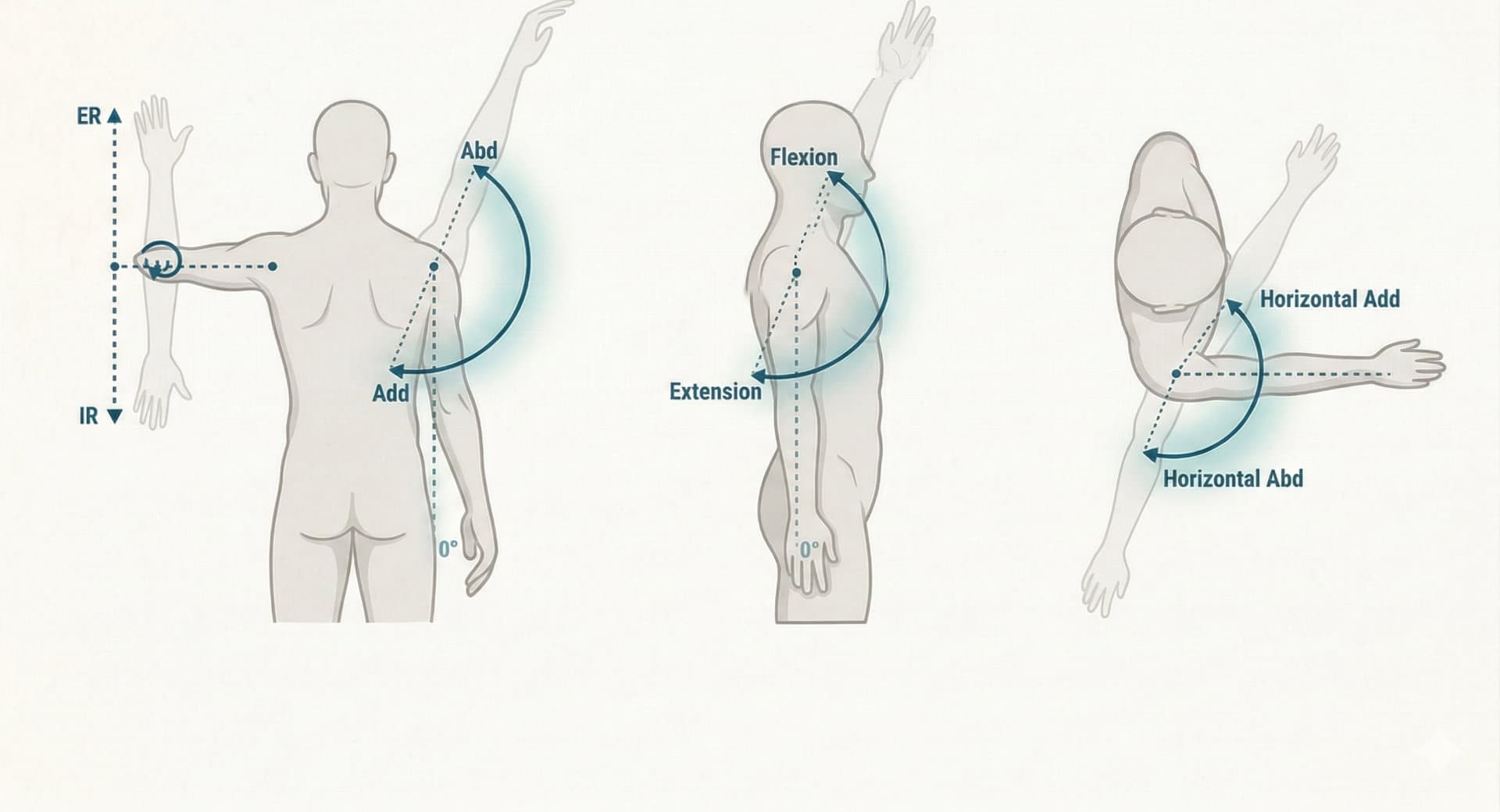

Co-Founder at PhysioFIT·May 20, 2026·9 min read
The short answer: when your shoulder hurts during push-ups or pressing, the exercise is rarely the villain — your position is. Flared elbows, hands too far forward, and a shoulder blade that doesn't move let the ball of your shoulder drift forward and pinch the rotator cuff against bone. Fix the mechanics, build the muscles that keep the joint centered, and most people press pain-free within a few weeks. Here's exactly how.
Quick check: where does it hurt?
- Front of the shoulder → usually rotator cuff or biceps tendon irritation from the arm bone drifting forward.
- Top / outer shoulder, worse overhead → classic impingement — tendons pinched under the bony roof.
- Deep, vague ache with weakness lifting the arm → get it assessed; this can point to a cuff tear and deserves a hands-on exam.
I'm a physical therapist at PhysioFIT in Bend, and I've spent two decades working with everyone from CrossFit Games athletes to weekend lifters. Pressing-related shoulder pain is one of the most common things I see — and one of the most fixable, because it usually traces back to mechanics we can change in a single session.
Why Push-Ups and Pressing Hurt Your Shoulders
Your shoulder is a remarkably mobile ball-and-socket joint, which means it relies on muscles — not bone — to stay centered. During a push-up or a press, two things have to happen: the rotator cuff has to hold the ball of the arm bone in the middle of the socket, and the shoulder blade has to glide and rotate to make room as your arm moves. When either fails, the head of the humerus slides forward and up, squeezing the cuff tendons and bursa against the bony roof (the acromion). That's impingement, and it's the source of the pinch most people feel.
Add a few hundred reps a week of that faulty position — push-ups, bench, overhead press, dips — and an irritated tendon turns into tendinopathy. The good news: change the inputs and the tissue calms down.
Is It Safe to Keep Doing Push-Ups With Shoulder Pain?
Usually yes — with modifications. The instinct to stop pressing entirely tends to backfire, because the muscles that protect the shoulder get weaker and you're no closer to fixing the cause. Use this rule of thumb:
- 0–3 / 10 ache that settles quickly → generally safe to train around with good form and reduced load or range.
- Sharp pain, night pain, or weakness lifting the arm → back off and get it assessed.
The simplest modifications: raise your hands to an incline (a bench, counter, or wall) to reduce the load and the range, or switch a deep barbell bench for a floor press that stops your elbows before they drop past your torso. You keep training; you just skip the painful range while the joint settles.
The Most Common Form Mistakes
| Mistake | Why it hurts | The fix |
|---|---|---|
| Elbows flared to 90° | Maximally pinches the cuff against the bony roof at the bottom. | Tuck elbows to ~45° from your body. |
| Hands too far forward | Forces the arm bone forward in the socket and overloads the front of the shoulder. | Set hands under (or just below) your shoulders. |
| Shoulder blades locked / shrugged | No room for the arm bone to move, so it jams upward instead. | Let the blades glide together at the bottom, apart at the top. |
| Sagging hips, head poking forward | Collapses the position and shifts load onto the front of the shoulder. | Brace the abs and glutes; keep a straight line head to heels. |
How to Do Push-Ups Without Shoulder Pain
A well-built push-up is genuinely good for your shoulders — it trains the serratus anterior and scapular control better than almost any machine. Here's the technique I coach:
- Set your hands just below shoulder level, a little wider than your ribs — not out by your head.
- Screw your hands into the floor as if turning the ground outward. This sets your shoulders into external rotation and instantly stabilizes the joint.
- Brace your abs and squeeze your glutes so your body moves as one rigid plank.
- Lower with elbows at ~45 degrees, not flared. Imagine making an arrow shape with your body, not a T.
- At the top, push the floor away and let your shoulder blades spread apart (the "push-up plus"). That last inch is the serratus work that protects the shoulder.
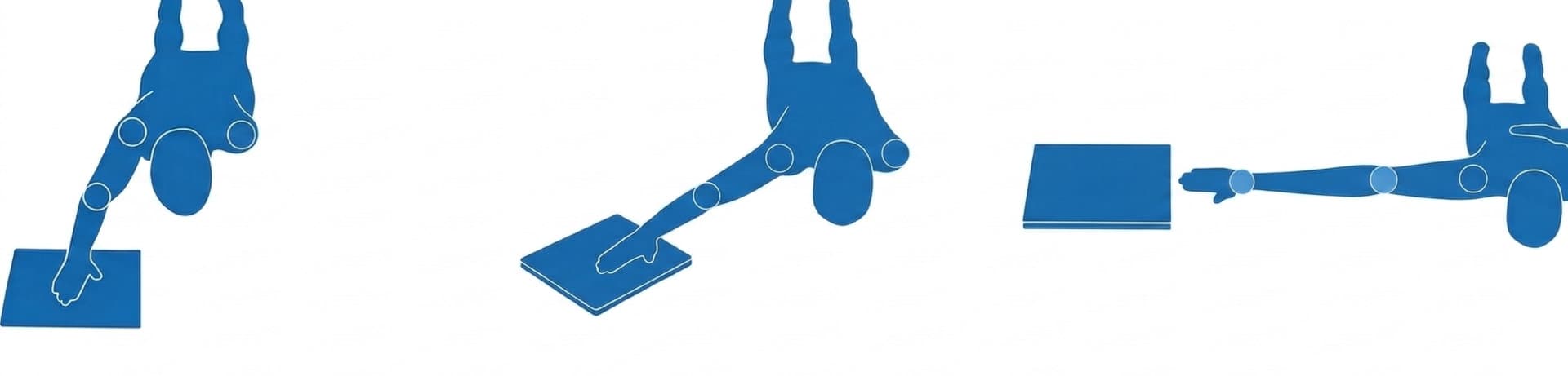
If a floor push-up still hurts, regress it: hands on a bench, then a counter, then a wall. Drop to the level where you're pain-free, own it for a week or two, then progress lower. That's how you train through the issue instead of around it.
Shoulder Pain From Lifting: Bench, Overhead & Dips
The same principles carry straight over to the barbell and dumbbells. Pressing movements aggravate shoulders for three repeat offenders:
- Too much range. Touching a barbell to the chest with flared elbows drives the arm bone forward. Tuck the elbows, or use a floor press / board press to cap the depth while you recover.
- No scapular setup. On bench, pin your shoulder blades down and back into the bench and keep them there. A floating shoulder blade is an unstable shoulder.
- Skipping the back of the shoulder. Most lifters press far more than they pull. That imbalance pulls the joint forward over time. Match or exceed your pressing volume with rows and pulls.
If your pain is specifically in the front of the shoulder with barbell work, we go deeper on that exact pattern — including the biceps-tendon piece — in our guide to anterior shoulder pain in weightlifters and CrossFitters.
Exercises to Build Bulletproof Shoulders
Form fixes the symptom; strength fixes the cause. These target the rotator cuff and the muscles that control your shoulder blade — the stabilizers nearly every aching presser is missing. Two sessions a week alongside your normal training is plenty.
- Banded external rotations — Elbow tucked at your side, rotate your forearm outward against a band. 2–3 sets of 12–15. This is the single most important cuff exercise for centering the joint.
- Prone I-Y-T raises — Lying face down, lift your arms in an I, then a Y, then a T shape. Hits the lower traps and cuff that keep the shoulder blade set. 2 sets of 8 each letter.
- Push-up plus & wall slides — Train the serratus anterior directly so your shoulder blade glides instead of jamming. 2–3 sets of 10.
- Face pulls — Pull a band or cable toward your face, leading with the elbows. The best counter to a press-heavy program. 2–3 sets of 15.
- Rows, and lots of them — Whatever your pressing volume is, aim to match it with pulling. Balance is what keeps the joint healthy long term.
When to See a Physical Therapist
Give the form changes and strengthening a few weeks. Book an evaluation sooner if you notice:
- Weakness or pain lifting your arm overhead or out to the side.
- Pain that wakes you at night or when lying on the shoulder.
- A catching, clicking, or dead-arm sensation under load.
- Pain that isn't improving after 3–4 weeks of smart modification.
- Any pain following a fall, dislocation, or a sudden pop.
If you're recovering from an operation rather than an overuse issue, that's a different roadmap — see our walkthrough of recovery after shoulder surgery instead.
How We Approach Shoulder Pain at PhysioFIT
When you come in for shoulder rehab in Bend, we watch you actually press — push-up, bench, overhead — because the fault almost always reveals itself under load. We test the rotator cuff and scapular control, often with objective strength testing so we can compare sides, then rebuild your pressing from a pain-free range up. The goal isn't to take push-ups away; it's to give you back a shoulder that can press for the next thirty years. If you want lasting shoulder pain relief, that's the path.
Bottom line: shoulder pain from push-ups and lifting is a mechanics and strength problem far more often than it's damage. Tuck the elbows, move the shoulder blade, train the back of the shoulder, and most people press pain-free again within a few weeks.
Frequently Asked Questions
Why do my shoulders hurt when I do push-ups?
Push-up shoulder pain almost always comes down to position, not the exercise itself. When your elbows flare straight out to the sides, your hands sit too far forward, or your shoulder blades don't move with the motion, the head of your upper-arm bone glides forward and pinches the rotator cuff tendons and bursa against the bony roof of the shoulder. Bring your elbows to roughly 45 degrees, set your hands under your shoulders, and let your shoulder blades glide — the pain usually drops fast.
Are push-ups actually good for your shoulders?
Done well, push-ups are one of the best shoulder exercises there is. They build the serratus anterior and the muscles that control your shoulder blade — the exact stabilizers most people are missing — and they load the rotator cuff in a closed-chain position the joint loves. The catch is that a sloppy push-up trains those faults under load. Fix the form first, then push-ups become protective rather than provocative.
Should I stop working out if my shoulder hurts when I lift?
Rarely all the way. Complete rest tends to leave you weak and no closer to the cause. The better move is to modify: drop the load, shrink the range to what's pain-free (a floor press or a higher push-up incline instead of a deep barbell bench), and keep the joint moving. Pain at a 0–3 out of 10 that settles quickly is usually safe to train around. Sharp pain, night pain, or weakness lifting your arm overhead is your cue to get it assessed.
What does it mean if the front of my shoulder hurts when pressing?
Front-of-shoulder pain with pressing is most often rotator cuff or biceps tendon irritation from the upper-arm bone drifting forward — common in benchers and overhead pressers who lack scapular control or back-of-shoulder strength. It's usually a movement and strength problem, not damage. For the barbell-specific version of this, see our deep dive on anterior shoulder pain in weightlifters and CrossFitters.
How long does it take for shoulder pain from lifting to heal?
Most form- and overload-related shoulder pain settles meaningfully in 2–6 weeks once you correct technique, calm the irritated tissue, and start targeted rotator cuff and scapular work. Tendon-driven cases can take 8–12 weeks of progressive loading. The people who heal fastest are the ones who keep training in a modified, pain-free range instead of resting completely and losing strength.
What are the best exercises to prevent shoulder pain when lifting?
Build the muscles that keep the joint centered: external rotations (band or cable), prone I-Y-T raises for the lower traps and rotator cuff, serratus work like push-up-plus and wall slides, and face pulls. Two short sessions a week alongside your normal pressing is enough to bulletproof most shoulders.
Please Note: The information on this page is for general education and is not a substitute for professional medical advice. Every shoulder — and every body — is different, and exercises should be performed under the guidance of a qualified physical therapist to ensure correct technique and avoid injury. If you'd like a plan built for your shoulder, or want to train with a physical therapist in Bend, Oregon, reach out at PhysioFITBend.com.